

When Consumption Trumps Consent
Who Gets Screwed by U.S. Sex Laws

I envision a world where we can make personal choices about our own bodies – for our health, pleasure, and survival – as long as we respect the consent of others. Given the United States’ complicated history with bodily autonomy and commodification, it’s worth considering a few key points.
Body Ownership
Profits from slavery played a major role in establishing the U.S. as a global economic power. While whites in the North and South profited from enslaved labor, the moral and social cost became impossible to ignore. Slavery was abolished in 1865 with the 13th Amendment (except as punishment for a crime).
While legal ownership of other humans became prohibited, the ownership of animals remains law of the land. Since the U.S.’s founding, animals have been treated as property rather than as individuals with self-sovereignty.
But even for humans, not every aspect of life is free – especially when it comes to sex.
Sex Work
Sex work started out legal by default – not because anyone was enlightened, but because no one had bothered to outlaw it yet. By the early 1900s nearly every state had jumped on the “morality” bandwagon and banned prostitution.
Many proponents of criminalizing sex work claim that these laws protect women. But their logic reeks of paternity and control. Prostitution positions women’s sexuality as autonomous – even profitable. A threat to puritans if there ever was one.
In a free world, someone wanting to commodify herself sexually to help pay for things like food and rent would have that choice. If someone is forced to sell sex, that’s a problem of coercion and economic pressure – not morality.
Curiously, sex and drug sales remain the obsessions of those in power – both are more restricted than violent weapons. While buying a semiautomatic firearm is legal in 40 states, sex work remains illegal except at licensed brothels in a few rural counties in Nevada. In 2023, Maine decriminalized selling sex – but purchasing it remains illegal.
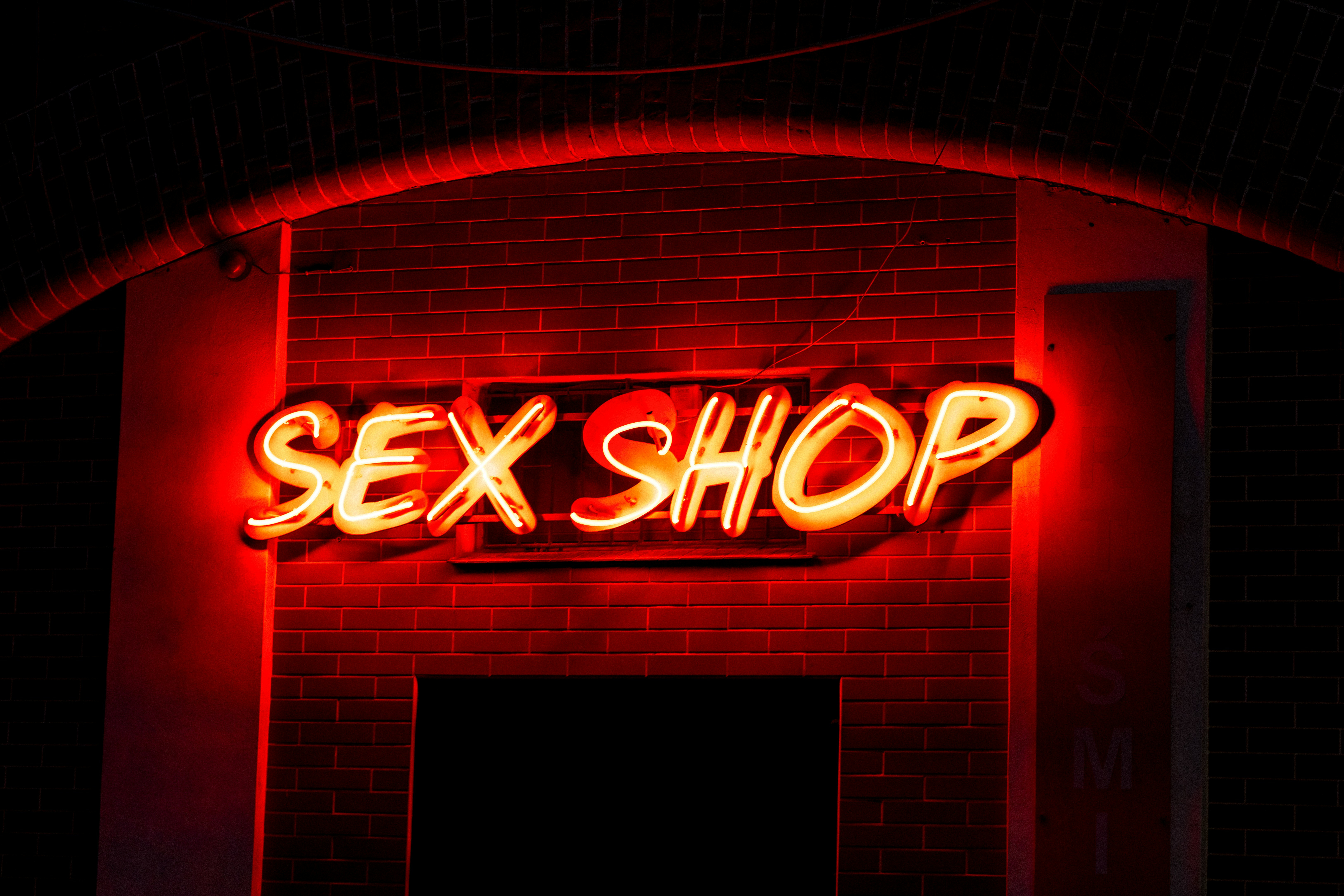
Decriminalizing Sex, Not for Profit
While the oldest profession remains largely illegal, at least sex itself is now mostly legal. By the 1990s, most states had repealed anti-sodomy laws, puritanically designed to outlaw any sex acts that weren’t penis-in-vagina (PIV, for acronym lovers). In 2003, the Supreme Court’s ruling in Lawrence v. Texas invalidated the sodomy laws still in place in 13 states.
In 2024, President Joe Biden pardoned veterans who had been convicted of gay sex under a 60-year military code that outlawed their behavior, and which had disallowed them pay and benefits. In a land of laws and loopholes, simply having the right to act on this most basic desire can feel like a win.
Recriminalizing Sex, Human to Non-human
While U.S. laws slowly started recognizing consent between humans, other animals remained unprotected. By repealing the sodomy laws, which were mostly aimed at criminalizing gay sex, lawmakers accidentally wiped out the anti-bestiality portions too.
As Gabriel Rosenberg and Jan Dutkiewicz write in The Meat Industry’s Bestiality Problem, state legislatures faced “equal parts horror and embarrassment when sensational cases of interspecies sex could not be prosecuted.”
Lawmakers had to get back to work to recriminalize sex acts from human to non-human. Phew. That was a close call. But… not so fast.
Decriminalizing Sex, Human to Non-human, if for Profit
By recriminalizing bestiality laws, the unintended consequence was a protection from rape for farmed animals. Whoops! Since animal agriculture relies heavily on human to animal sex acts – what the industry calls “artificial insemination” – the laws recriminalizing human to animal sex unintentionally banned this form of bestiality.
Rosenberg and Dutkiewicz point out, likely with a raised eyebrow: “The legal distinction between artificial insemination and bestiality was not a foregone conclusion. Rather, it is the product of the lobbying power of large farms.”
To understand the scale and normalization of these industrial sex acts, here is just one example of agricultural bestiality that comes directly from an industry magazine, The Poultry Punch, and instructs workers on how to collect semen from roosters:
The bird should be held in a horizontal position by a person at a height convenient to the operator who is attempting to collect the semen. Massage should be rapid and continuous until the cock protrudes the papilla from the cloaca.
To ensure these methods of forced fornication remained legal, lawmakers had to change the laws once again. These new loopholes specifically exempted animal husbandry. In other words, humans could initiate sex acts with animals as long as it was for profit. In those instances, totally legit – nevermind morally bankrupt.
Clear as Mud? / TL;DR
This hopscotching of sex laws shows that while laws have shifted with our social beliefs, morality gets chewed up and spit out when profit is on the table.
An attempt to summarize. In the United States:
Humans can no longer own other humans.
Humans can, and do, own non-humans.
Humans can have consensual sex – except when it’s for profit (outside of dusty Nevada brothels)
Humans can’t have sex with non-humans – unless it is for profit.
When consumption trumps consent, a nation allows the unthinkable: systematically violating and terrorizing those with the least power. Animal exploitation, sex work criminalization, and profiting off of incarcerated people are all part of the same system.
May I be so bold as to suggest a simple alternative?

Consensual Pleasurable Over Profit
What if we honored consent – not control for profit – in every relationship?
Everyone gets to choose for their own body, as long as they don’t violate another.
Simpler still: consent is for every body.
Bonus Reflection
Giving up control by choice (e.g. in BDSM) is very different from having freedom stripped away (e.g. through force). Consent can turn power into mutual play and pleasure.
For an example where consent is explicit and central, see my story: Rodeo vs Rope Play: Only One of These Cowboys Got Consent.
So true - so sad. I love how all your posts circle back to non-human animals, Sadie! This connection escapes many.
I had never considered the reality that this form of bestiality is still in practice today and calling it what it is.